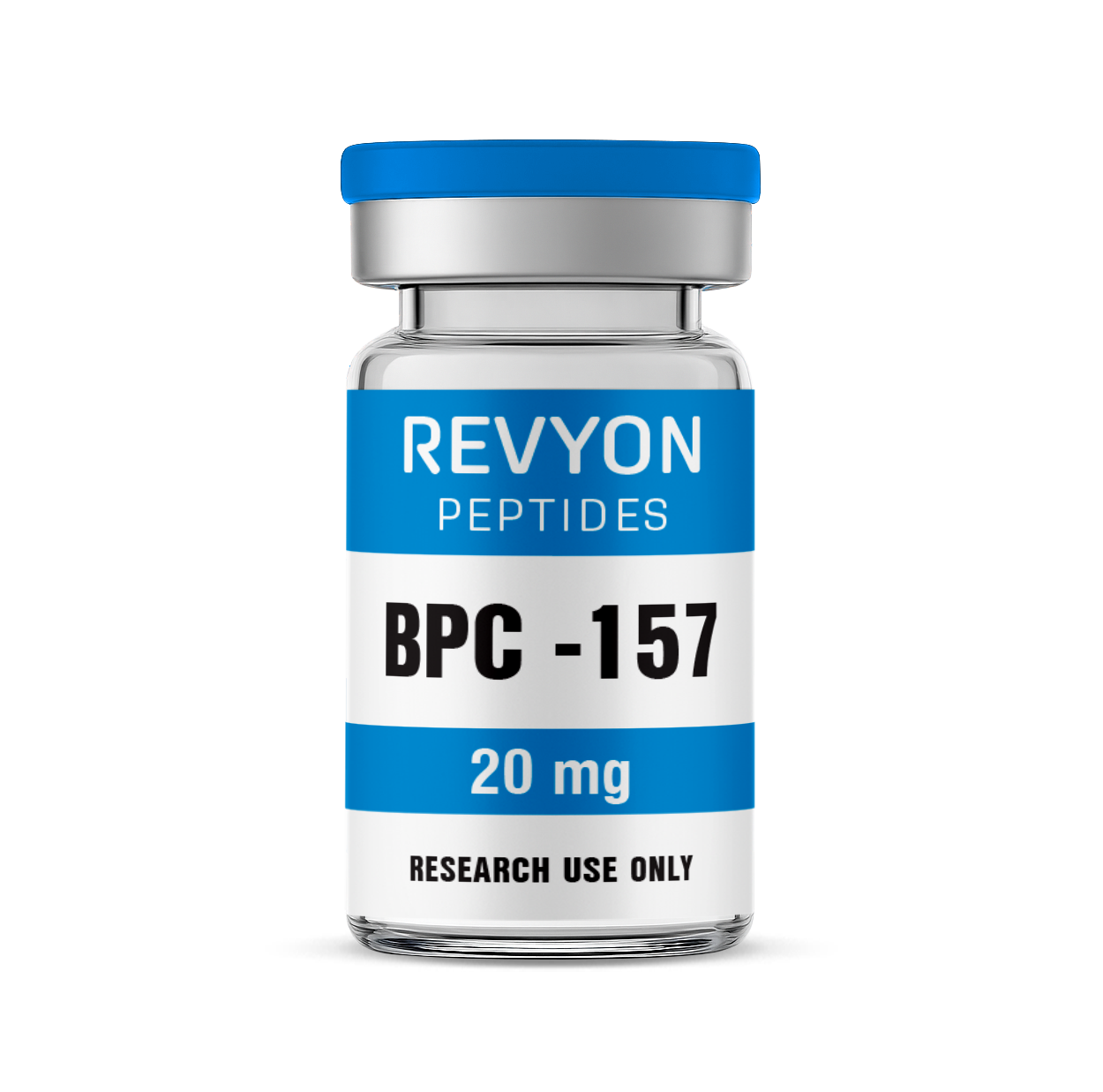
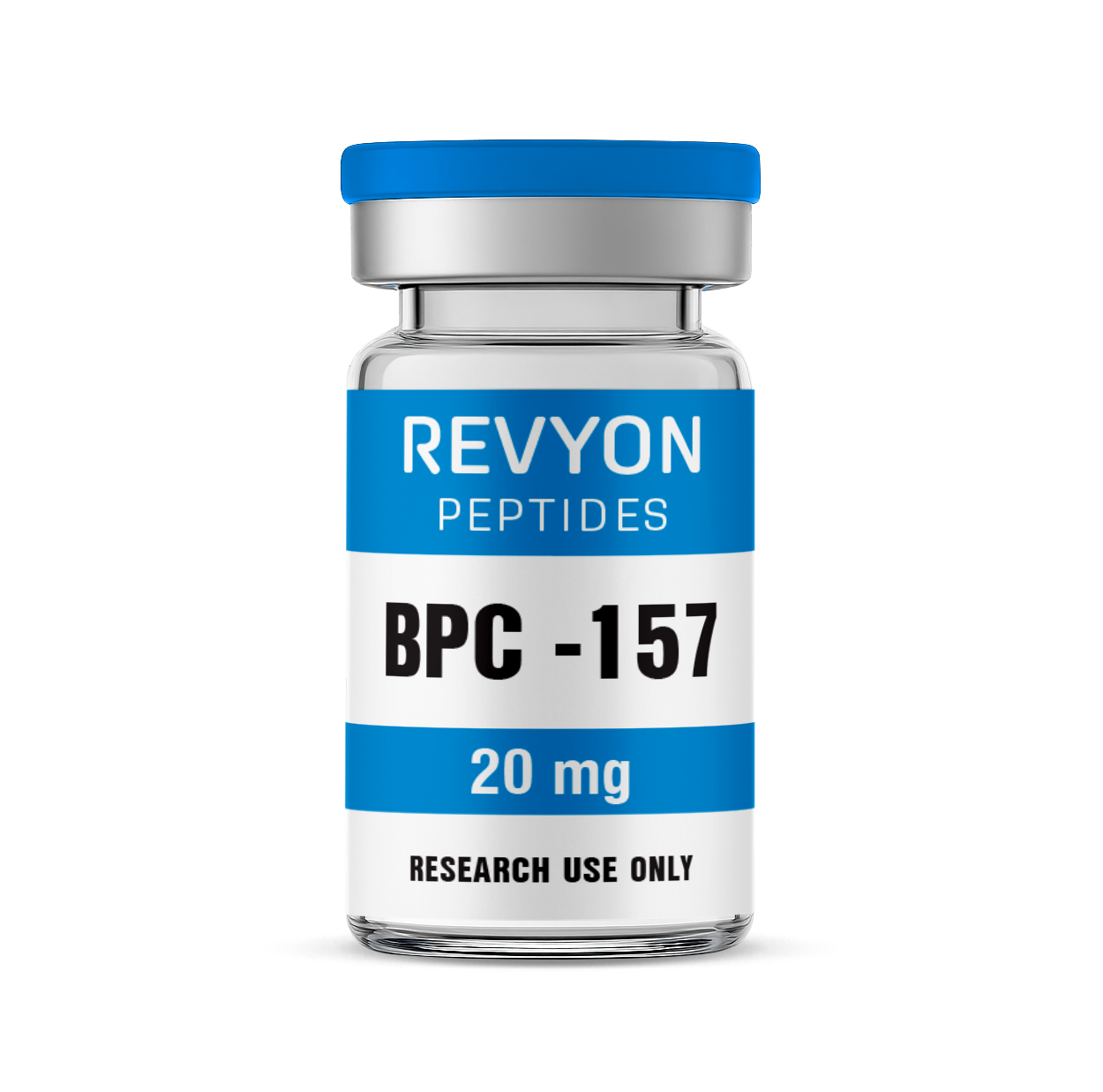
BPC-157 (Body Protection Compound-157) is a stable gastric-derived peptide known for its exceptional ability to accelerate healing of muscles, tendons, ligaments, and the gastrointestinal lining. It modulates growth-factor expression, improves angiogenesis, and protects endothelial tissue, making it a cornerstone peptide in regenerative protocols.
RESEARCH
BPC-157 is a synthetic peptide fragment derived from a naturally occurring protein found in gastric juice. It has been studied extensively in laboratory settings for its potential to support tissue regeneration and cell protection. This peptide is supplied in lyophilized powder form to ensure maximum stability during storage.
CHEMICAL INFORMATION:
- Molecular Formula: C62H98N16O22
- Molecular Weight: 1419.54 g/mol
- Sequence: Gly-Glu-Pro-Pro-Pro-Gly-Lys-Pro-Ala-Asp-Asp-Ala-Gly-Leu-Val
RESEARCH APPLICATIONS:
BPC-157 is a versatile tool for research, with focus areas that include:
- Tissue Regeneration: Examining its effects on cellular repair mechanisms in controlled preclinical models.
- Inflammatory Pathways: Exploration of peptide interactions with cytokines and inflammatory markers.
- Angiogenesis: Investigation of its potential role in promoting new blood vessel formation during wound healing.
STORAGE AND HANDLING:
- Store the lyophilized powder at -20°C.
- Once reconstituted, store at 2-8°C and use promptly.
- Maintain aseptic handling practices to ensure product quality and sterility.
PRODUCT SPECIFICATIONS:
- Purity: ≥99% (HPLC Certified)
- Appearance: Lyophilized white powder
- Solubility: Soluble in bacteriostatic water
COMPLIANCE NOTICE:
BPC-157 is FOR RESEARCH USE ONLY. It is not intended for human or veterinary use. This product has not been evaluated by the FDA. Misuse of this product is strictly prohibited and may violate federal, state, or local laws. By purchasing this product, buyer represents and warrants that it will be used only for in vitro research purposes.
KEY BENEFITS:
- Stimulates tissue repair in muscles, tendons, ligaments, and the gut lining
- Enhances angiogenesis (new capillary formation) and collagen synthesis
- Reduces inflammation and oxidative stress around damaged tissue
- Protects gastric mucosa and may counter NSAID-related injury
- Speeds recovery from sports injuries and post-surgical procedures
- Improves joint mobility and connective-tissue resilience
MECHANISM OF ACTION (SIMPLIFIED):
- Upregulates growth factors (VEGF, FGF, EGR-1) → angiogenesis & fibroblast activation
- Stimulates fibroblast migration → faster collagen repair
- Down-regulates pro-inflammatory cytokines (IL-6, TNF-α)
- Enhances nitric oxide signaling → improves blood flow to injured tissue
APPLICATIONS / POSSIBLE USES:
- Soft-tissue injury recovery (muscle, tendon, ligament)
- Gastrointestinal protection & ulcer support
- Systemic or localized anti-inflammatory protocols
- Often paired with TB-500 for enhanced musculoskeletal repair
FORM / NOTES:
- Lyophilized 10 mg vial for reconstitution (2–5 mL bacteriostatic water typical).
- Utilized in research and clinical compounding for regenerative and anti-inflammatory applications.
Revyonpeptides.com Privacy Policy
Last Updated: January 1, 2026
Welcome to Revyon. We understand that you care about how your personal information is collected, used, and shared. We value your trust and strive to handle your information responsibly. This Privacy Policy explains how Revyon and its affiliates ("Revyon") gather and process your personal information when you use our websites, devices, services, products, physical or online stores, and applications that reference this policy (collectively "Revyon Services"). By using Revyon Services, you agree to the practices outlined in this policy.
What Information Does Revyon Collect?
Revyon collects information to enhance and improve the services we offer. Here's an overview of the types of information we collect:
- Information You Provide: We store any information you provide in connection with using Revyon Services. You can choose not to provide certain information, but that may prevent you from taking full advantage of our offerings.
- Automatic Data Collection: We automatically gather information regarding your interaction with Revyon Services, including product and content usage. Similar to many websites, we utilize "cookies" and unique identifiers to capture details when your browser or device accesses Revyon Services or related content.
- Information from External Sources: We may receive information about you from third parties, such as updated delivery details from carriers, which helps us improve your experience by updating records for smoother order fulfillment.
Why Does Revyon Use Your Personal Information?
We use your personal information to deliver, maintain, and improve the services and products we provide. This includes:
- Order Processing and Fulfillment: We use your data to manage orders, deliver products, process payments, and communicate regarding orders and promotional offers.
- Service Enhancement: We rely on your information to ensure functionality, analyze performance, fix bugs, and improve the usability of Revyon Services.
- Personalization and Recommendations: We use your data to tailor recommendations, suggest products or services that might interest you, and personalize your experience.
- Voice, Image, and Camera Services: When using voice or image-based services, we use the relevant inputs to respond to your requests and enhance the service.
- Legal Compliance: We collect and use personal information to meet legal requirements in certain situations.
- Communication: Your information allows us to contact you across various channels (e.g., email, phone, chat) about your account and Revyon Services.
- Advertising: We use your information to display ads based on your interests. However, we do not use data that directly identifies you to serve interest-based ads.
- Fraud Prevention and Credit Risk: We use personal data to prevent fraud and assess and manage credit risk.
Use of Cookies and Other Identifiers
To recognize your browser or device and provide tailored services, we use cookies and other identifiers.
Does Revyon Share Your Information?
Your privacy is important to us, and we do not sell your personal information. However, we share it in the following circumstances:
- Transactions with Third Parties: Some services, products, and applications offered through Revyon Services are provided by third parties. For example, you may purchase third-party products or download third-party apps. We share relevant information with these third parties to facilitate such transactions.
- Service Providers: We use other companies to perform tasks on our behalf, such as fulfilling orders, delivering products, sending communications, processing payments, analyzing data, and providing customer support. These service providers have access to personal information necessary for their tasks but are prohibited from using it for other purposes.
- Business Transfers: In the event of a business transfer, such as selling or acquiring assets, customer data is typically part of the transferred assets, though it remains subject to any prior privacy policy unless otherwise agreed by the customer.
- Legal Protection: We may share account and other information if required to comply with legal obligations or to protect Revyon's rights, safety, or property, including sharing data for fraud prevention and credit risk reduction.
In cases not covered above, we will notify you when your personal information may be shared with third parties, giving you the opportunity to opt out.
How Does Revyon Ensure the Security of Your Information?
We take the security of your personal information seriously.
- We use encryption protocols and software to secure your data during transmission.
- We follow the Payment Card Industry Data Security Standard (PCI DSS) when handling credit card details.
- Our systems incorporate physical, electronic, and procedural safeguards to protect your personal information, and we may request verification of your identity before disclosing sensitive data.
Your Revyon devices also come with built-in security features to prevent unauthorized access, and we recommend using strong, unique passwords and logging out when using shared devices.
Advertising Practices
- Third-Party Advertisers and External Links: Revyon Services may contain advertisements from third parties and links to external websites or apps. These advertisers may gather information when you engage with their content.
- Third-Party Advertising Services: To improve the relevance of ads shown to you, we share non-personally identifiable data, such as cookies or device identifiers, with advertising partners. However, we do not share your personal details like your name or specific actions with ad companies.
Access to Your Information
You can view and update your account details, including your name, address, payment options, and purchase history, in the "Your Account" section on our website.
Your Choices
You can manage your privacy preferences and access settings in many Revyon Services. If you have any concerns about how we handle your information, please contact our Customer Service. Where required by law, you may have the right to request access to or deletion of your personal data.
Use of Revyon Services by Children
Revyon does not offer products for purchase by children. Products for children can only be purchased by adults. If you are under 18, you must use Revyon Services under the supervision of a parent or guardian.
Changes to This Privacy Policy
Your use of Revyon Services is subject to this Privacy Policy and our Conditions of Use. We may update this policy as our business evolves, and changes will apply to information we already hold unless stated otherwise. We will not make significant changes to our policies that reduce the protection of your personal data without your consent.